
Curriculum
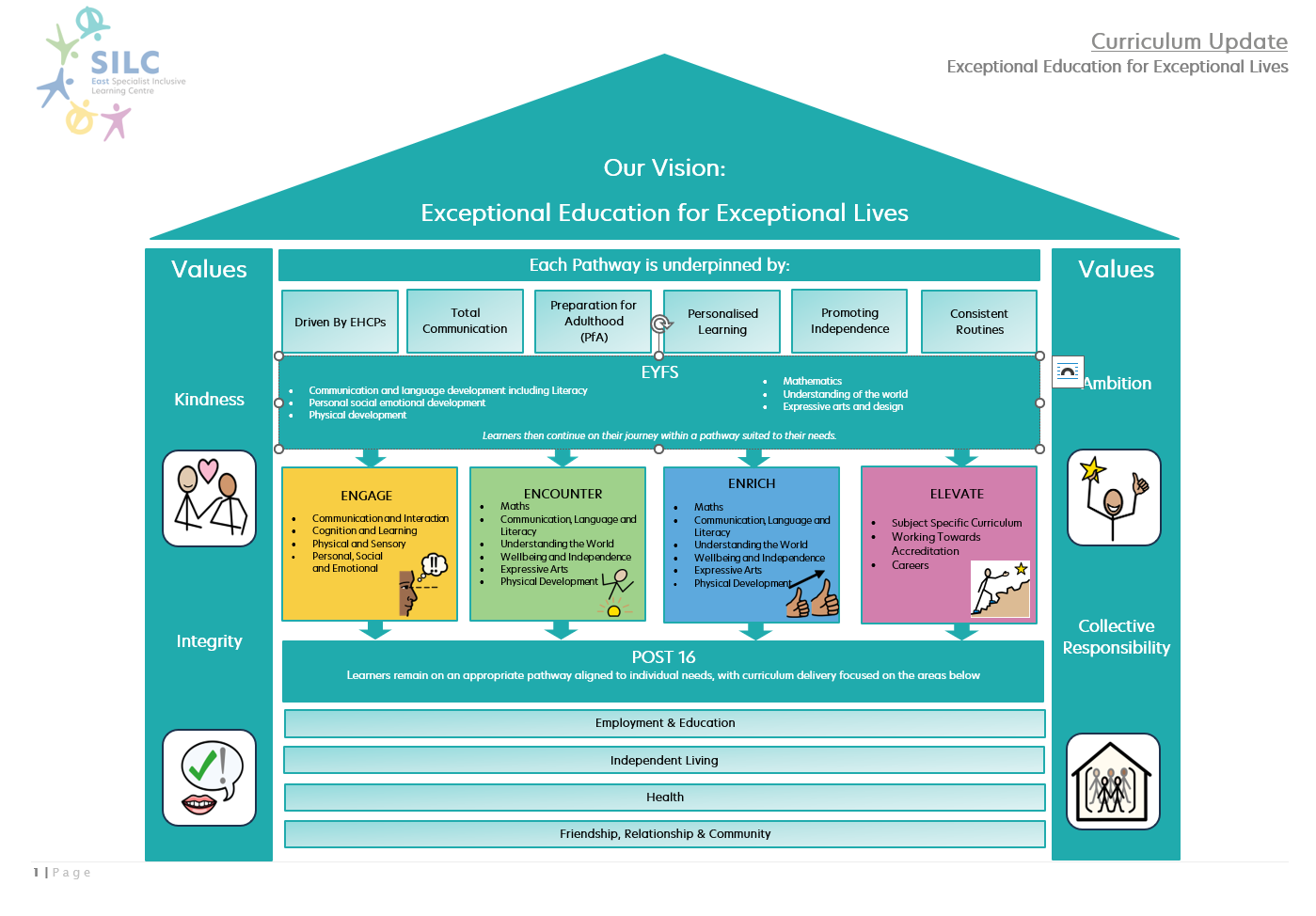
At the East SILC, we offer a broad, balanced and engaging curriculum that is ambitious for all learners, develops independence, and meets individual student needs. Our curriculum is driven by the need to develop the skills, knowledge and understanding that are the building blocks for later life. This is achieved through the six areas for learning and subject specific curricula.
The East SILC curriculum encompasses the requirements of the National Curriculum, but goes beyond the experiences of the classroom to ensure that our students develop the skills required to apply their learning in a range of environments and contexts. This is achieved through our readiness for learning and preparation for adulthood curricula.
The curriculum is further enhanced by our commitment to developing cultural capital so that students are able to link their learning with real experiences. This is achieved through our Preparation for Adulthood curriculum.
The aims of our curriculum are to:
- Promote the independence of all students, encouraging them to take ownership of their own development.
- Prioritise preparation for adulthood and ensure that students have the required knowledge, skills and understanding to have meaningful access to the wider society.
- Develop reading, communication and language skills in all areas of the curriculum.
- Fulfil the requirements of an adapted National Curriculum.
Curriculum Areas
English
At our school, we follow the Read Write Inc. programme by Ruth Miskin to support children in developing their reading skills. For pupils who are not yet ready to access phonics, we provide pre-phonics activities designed to build foundational skills through mark making and attentive listening to environmental sounds.
Children participate in phonics sessions four times per week, with the duration of each session tailored to meet their individual needs. In addition to phonics, each class shares a core text to ensure that all learners are exposed to a broad and enriching range of literature.
For children who have progressed through phonics and are fluent readers, literacy lessons are delivered within their pastoral groups four times per week. These sessions focus on individual reading and writing targets and are structured around a carefully chosen class text to support continued development in literacy.
Maths
We follow the Maths for Life scheme, which is specifically designed for children with Special Educational Needs. It is carefully structured to ensure that children gain the mathematical skills they need for adulthood, with a strong emphasis on key life skills such as managing money, telling the time, understanding measurements, and problem-solving in everyday contexts.
We have carefully adapted the scheme to ensure that it is accessible for children working in the earlier, pre-number stages of mathematics. A dedicated curriculum supports the development of early mathematical concepts, and once these foundations are securely in place, children transition to the Maths for Life scheme. The scheme then continues through to support children studying for entry-level.
Knowledge and Understand of the World
People and Communities (Humanities and RE)
Supports learners to understand different people, beliefs, and cultures in their community and around the world. It helps them understand and respect others, share their own ideas, and learn how to be kind, fair, and responsible. Learners also learn how to make positive relationships, solve problems and feel proud of who they are. The curriculum also equips learners with historical and social knowledge, enabling them to understand their place in the world, build meaningful relationships, and become responsible, conscientious citizens.
Parents and Carers may withdraw their child from the RE elements of the curriculum, to do this or if you require more information please contact your class teacher.
Science and Computing
Science allows learners to engage with, experience, and understand the world around them. Learners are encouraged to develop their curiosity through a sensory and practical-based curriculum with relevant links to real life applications. Safety and opportunities for independence are paramount in science to allow learners to develop the skills they need to become as independent as possible when they enter adulthood. As well as knowledge of key scientific concepts, learners are taught investigative skills, the safe use of equipment, how to observe and record details, and the link between cause and effect.
Wellbeing and Independence
Personal, Social and Emotional Development
At the East SILC our PSHE (Personal, Social and Health Education) curriculum is designed to empower all pupils, regardless of their individual needs, to develop the knowledge, skills, and attributes necessary for life beyond school. We aim to provide a safe, inclusive, and supportive environment where every learner can thrive socially, emotionally, and academically.
Develop Communication and Social Skills: Support pupils in building positive relationships and expressing themselves effectively.
- Enhance Emotional Wellbeing: Teach pupils to recognise, understand, and manage their emotions, promoting mental health and self-regulation.
- Celebrate Diversity and Inclusion: Ensure pupils understand and respect differences, promoting equality and a sense of belonging within the wider community.
- Promote Independence and Resilience: Equip pupils with practical life skills and strategies to manage challenges, fostering confidence and autonomy.
- Safeguard and Protect: Deliver clear, accessible learning about personal safety, consent, and online safety, tailored to individual needs and comprehension levels.
Our curriculum is underpinned by Prepare for Adulthood: Providing age-appropriate guidance on health, safety, relationships, and economic wellbeing to prepare pupils for future opportunities and responsibilities.
Food Technology
Our Food Technology curriculum is designed to be inclusive, engaging, and accessible for all learners. We aim to foster a positive relationship with food through hands-on experiences that promote enjoyment of food, build independence, and develop essential life skills.
Learners are guided to understand the importance of a healthy lifestyle and a balanced diet, using practical activities to explore how food choices impact wellbeing. We place strong emphasis on hygiene and preparing safely, ensuring that all learners feel confident and secure in the kitchen environment through clear routines, visuals, and structured support.
PfA (Preparation for Adulthood) outcomes, helping students to gain the skills needed to cook simple meals, make informed food choices, and manage their own health and nutrition. Learners are encouraged to explore seasonal cooking, using fresh and accessible ingredients to create meals that reflect the time of year and promote sustainability.
Through differentiated teaching, sensory experiences, and scaffolded learning, we ensure that every student can access the curriculum, celebrate their achievements, and develop a sense of pride and autonomy in their culinary skills.
Expressive Arts and Design
Art and Design and Technology
The Art and design and technology curriculum develops learners’ ability to explore, experience, engage, make choices, express & explore their ideas and feelings, and understand that mistakes and misconceptions are all part of learning. The art curriculum promotes a love of learning and enjoyment of art by sustaining interest and enjoying the process of art, exposing Learners to a range of mediums, styles, materials, techniques, artists and tools. Learners develop a passion for art including an appreciation that it links to different cultures and communities and understand that art can have a positive impact on wellbeing, offering meaningful opportunities in adulthood as either a career or leisure interest.
Music
At the East SILC we believe each individual learner should have every opportunity to communicate and express themselves. Our role as educators is to support and develop these processes through a high-quality curriculum, essential experiences and a person-centred approach. Music is a universal language which can shape lives. Music connects our learners to people and places and promotes communication and collaborative learning. Music encourages learners to express themselves and develop their own interests, and to explore the wider world through music from other cultures. Musical learning supports pupils in developing their own creativity and independence. In adulthood music can enhance access to celebration, community and employment.
Physical Development and PE
The intent of our Physical Development curriculum is to empower learners with the knowledge, skills, and confidence to lead active, healthy lives. Through a progressive and inclusive approach, we aim to develop both fine and gross motor skills, enhance body control and coordination, and build fundamental movement competencies.
Learners will engage in collaborative activities that foster teamwork, communication, and social development, while exploring a wide range of sports and physical pursuits. Learners will gain the knowledge and self-regulation strategies necessary to participate safely and effectively in diverse physical activities, enabling them to thrive both in and beyond the school environment.
East SILC Pathways
East SILC Pathways
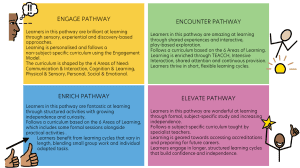
East SILC Curriculum
East SILC Curriculum One Page Guide
Music Development Plan
Accreditation at Key Stage 4 & 5
| Subject | Accreditation Level | Exam Board |
| English | Entry Level 1/2/3 /GCSE | Pearson / WJEC |
| Maths | Entry Level 1/2/3/GCSE | AQA / Pearson |
| Science | Entry Level 1/2/3 | AQA |
| Arts Award | Entry 3 | Trinity College |
| Essential Digital Skills | Entry Level | Pearson |
| Duke of Edinburgh | Duke of Edinburgh Award |
“We apply a holistic approach to learning, working closely with speech therapists, occupational therapists, physiotherapists, educational psychologists and the school nursing team.”